
The Concept of Luck in Gambling
Luck is often viewed as a mysterious force that influences outcomes in gambling. When players sit at a table or spin the reels, they hope for a fortunate hand or a lucky spin. This belief in luck is deeply ingrained within the culture of gambling, where people often share tales of incredible wins attributed to sheer chance, like those found at the best australian online casino that offer thrilling experiences and exciting rewards. However, luck is not merely an abstract idea; it raises important questions about the nature of randomness and probability, both crucial components in the world of betting.
Mathematically, outcomes in games like poker or roulette are dictated by probabilities. Each card dealt or each spin of the wheel follows a predetermined set of probabilities. Therefore, while luck may play a role in an individual’s experience, mathematically, it can be analyzed and predicted to a certain extent. This duality—where luck appears influential but is ultimately governed by chance—creates a complex relationship between players and outcomes.
Moreover, many gamblers perceive luck as something that can be cultivated. Players often engage in rituals, whether it’s wearing a lucky shirt or following a specific routine before placing their bets. Such behaviors illustrate how people attempt to make sense of the randomness and uncertainty of gambling. This belief in luck can enhance the gambling experience, even if it remains largely a psychological perception rather than a measurable reality.
Statistical Analysis and Probabilities
In the realm of gambling, statistical analysis serves as a counterbalance to the subjective notion of luck. Each game has its rules and odds, which can be calculated and exploited by knowledgeable players. For instance, in blackjack, players can use strategies based on probabilities to improve their odds against the dealer. This analytical approach can lead to more consistent outcomes, contrasting with the erratic nature of luck that many associate with gambling.
Numerous studies have shown that players who educate themselves on the probabilities of the games they play tend to have better outcomes than those who rely solely on luck. For example, poker is a game of skill as much as chance. Experienced players utilize their understanding of odds, player behavior, and game theory to gain an advantage. This indicates that while luck may influence short-term results, skill and knowledge can significantly affect long-term success, suggesting that luck alone cannot be deemed a reliable measure in gambling.

Furthermore, the reliance on statistical probabilities can lead to a phenomenon known as the “gambler’s fallacy,” where players mistakenly believe that past outcomes influence future events. For instance, if a roulette wheel lands on red several times in a row, players might believe that black is “due” to occur next. However, each spin is independent, governed by the laws of probability, and not influenced by previous spins. This highlights how understanding statistics can challenge the perception of luck as a governing force.
The Role of Skill in Reducing Luck’s Impact
While luck undoubtedly plays a role in gambling, many games incorporate a significant skill element that can alter the equation. Take poker, for example; success in poker isn’t solely about having the best hand but also mastering strategies such as bluffing and reading opponents. Skilled players can manipulate their chances of winning through informed decision-making, proving that skill can mitigate luck’s inherent randomness.
In contrast, games purely based on chance, like slots or the lottery, offer little opportunity for skill to influence outcomes. These games operate entirely on luck, with players unable to employ strategies to sway the probabilities in their favor. This variance raises further questions about the measure of luck: in games requiring skill, luck may dictate the outcome in the short term, but over time, skill often prevails.
The balance between luck and skill varies significantly across different gambling activities. For instance, in sports betting, extensive knowledge of teams and statistics can greatly enhance a bettor’s accuracy. Meanwhile, casino games like baccarat are heavily luck-based, where outcomes are largely random and skilled players may find themselves at the mercy of chance. Thus, the extent to which luck can be measured in gambling is highly influenced by the type of game and the player’s ability to leverage skill effectively.
The Psychological Aspect of Luck
The psychological influence of luck should not be underestimated in the gambling world. Many gamblers often feel that they can sense when luck is on their side, attributing wins to positive energy or an undeniable “good vibe.” This belief can impact their decision-making, leading to higher stakes and more reckless behavior. The interplay of psychology and luck creates a cycle where belief in luck may drive players to chase losses, reinforcing the belief that luck can be controlled or influenced.
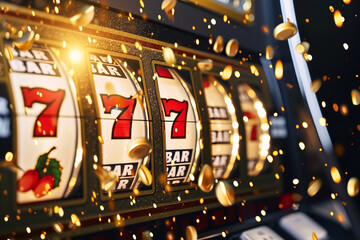
This psychological phenomenon extends beyond individual players. Casinos and gaming establishments are designed to exploit these feelings. The sounds, lights, and overall ambiance create an environment that amplifies the excitement and anticipation associated with winning, often leading players to feel that they are closer to a win than they truly are. In this way, the perception of luck is manipulated by external factors, which can lead to an emotional connection with the game and a desire to keep playing.
Moreover, the thrill of chance—the prospect of winning against the odds—fuels the gambling industry’s growth. This thrill is often tied to the idea of luck, creating a compelling narrative that keeps players engaged. Regardless of statistical outcomes, the emotional highs and lows experienced in gambling can shape a player’s perception of luck, making it a vital and almost mythical component of the overall gambling experience.
Understanding Your Own Luck at the Casino
For anyone venturing into the world of gambling, understanding one’s relationship with luck is crucial. Recognizing whether you are driven by chance or skill can inform your gaming choices and enhance your experience. Players should consider evaluating their strategies, understanding game mechanics, and cultivating a realistic approach to luck rather than relying solely on it. This awareness can lead to more responsible gambling practices, improving enjoyment while potentially reducing losses.
Gambling should be viewed as a form of entertainment rather than as a reliable means of income. Players often approach games with the hope of winning, but it’s essential to understand that losses are part of the experience. Emphasizing fun rather than focusing solely on luck can foster a healthier perspective. This approach encourages players to enjoy the social aspects of gambling and the excitement of the games themselves without undue pressure to win.
In conclusion, luck in gambling is a multifaceted concept that combines chance, skill, psychology, and personal perception. While it can influence individual events, it is often governed by probability and statistics. Players who comprehensively understand these aspects can better navigate the complexities of gambling, leading to more enjoyable experiences and informed decisions.